You See Me
Plus: The Cat on "Emotions & Generalisations"
Welcome to the Crazy Insights newsletter, where everything we share is inspired by our readings, learning, and experiences. If you've just joined us, we're thrilled to have you on board 👋
“Whatever is begun in anger, ends in shame.”
- Benjamin Franklin (1706 - 1790)
Fun fact: This is the 51st edition of our newsletter 🥳
CHELS’ WORLD 🌍
You See Me

I don’t like going to the hospital. By the time I’ve decided I need one, I’ve usually convinced myself that I have exhausted every other option.
“It’s probably stress.”
“I will work from home today.”
“I just need some sleep.”
“I will be fine.”
Most of the time, I am. This time, I wasn’t.
I genuinely like my job. So, when I start feeling unwell, my first instinct isn’t to stop. It’s to negotiate with my body. Surely, if I can still work, I can’t be that sick.
“Just get through today.”
“You can rest tomorrow.”
“It’s really not that bad.”
It started with chills at work. I brushed them off and carried on with my day. The next day, I stayed home, convinced one day of rest would sort everything out. By Wednesday, I thought I felt well enough to go back to the office. I made it through one meeting. That was it. The chills came back, stronger this time, and I knew I needed to go home. I still wasn’t thinking “hospital.” I was thinking, “A few more days of rest and I will be fine.”
By Thursday, I felt well enough to write one of my theatre reviews. I took that as a good sign. I even found myself looking forward to the weekend. I had two plays lined up, and in my head, everything was returning to normal.
Then, at one o’clock on Friday morning, I woke up shivering. I don’t mean the shivering where you pull a blanket over yourself and go back to sleep. I mean the kind where your body is burning with fever, but you can’t stop feeling cold. I tried to sleep, but every time I drifted off, the fever woke me again. Somewhere between one and four in the morning, I sat up in bed and wailed. I don’t even know if I was praying. I remember talking to God through tears. By 4:40 a.m., I knew I couldn’t wait for my hospital appointment anymore. I threw a few things into a bag, booked an Uber, and went straight to the emergency room.
The next few hours blurred together: blood tests, an IV, cannulas that seemed determined not to cooperate, more needles than I cared to count.
Then the doctor came back. “We’ll need to admit you.” Oddly enough, that wasn’t the hardest part. The hardest part was lying in that hospital bed afterwards.
I didn’t want to call my parents because I didn’t want them to worry. I didn’t want to inconvenience my friends because everyone has their own lives, their own responsibilities, and their own struggles. It wasn’t that I didn’t have people. I just didn’t want to become one more thing they had to carry. Somewhere in the middle of it all, I finally called my parents.
Looking back now, I realise I had been believing a few lies for a long time. That I would be fine, that rest could wait, that people were too busy, that asking for help would inconvenience them.
Then people started showing up. My sister prayed for me over the phone. One friend brought food I couldn’t eat; we laughed about it, and he ate it himself. When I was vomiting, my friends held me. When my IV wasn’t cooperating, one of them sat beside me holding pressure on it until it finished. Some made me laugh. Some sat quietly because they knew I didn’t have the energy to talk. Some stayed long into the night. And every single one of them reminded me that I wasn’t carrying this alone.
At some point, lying in that hospital bed, I remember thinking, God, You really do see me. Not because I was suddenly feeling better; I wasn’t. Not because everything was okay; it wasn’t. But because before I could settle into the loneliness, He met me through people.
It felt like He was gently reminding me of truths I had forgotten.
You are loved, you are seen, and you do not have to go through life alone.
To my friends, this part is for you.
Thank you. Thank you for showing up. Thank you for making me laugh when I didn’t think I had the strength to. Thank you for sitting with me when conversation felt like too much. Thank you for holding me up, sometimes quite literally. Thank you for reminding me, in the most practical way possible, what love looks like. Thank you for loving me so well.
I don’t think I will ever fully be able to tell you what your presence meant to me, but I hope you know I will never forget it.
I am still recovering; I am still taking my medication; I am still trying to learn that rest isn’t something to earn. Some days I remember. Some days I slip back into old habits. I am learning. Slowly. And maybe that’s okay.
When I think back on those days, I remember the fever. I remember the needles. I remember the cannulas that refused to cooperate.
But more than any of those things, I remember the people. I remember feeling loved in a way I didn’t expect. I remember feeling seen. And I remember a God who quietly reminded me that I was never alone.
If there’s one thing I hope you take away from this, it’s this:
You are loved.
You are seen.
And you don’t have to go through life alone.
I found this interesting:
THE CAT’S LAIR ☠️
Emotions & Generalisations

When I make pronouncements in an emotionally unbalanced state, there is a 90% chance my claims will turn out to be wrong. I am not alone. I have observed that when people are in deep states of anger, sadness, grief, happiness or joy, they tend not to see things clearly. When I am frustrated, the annoying things my neighbour does seem like they are ALWAYS that way. I fail to reach deep within my memory to recall a day when she actually refrained from upsetting me. I forget days when she was helpful, courteous and kind. I focus solely on the present moment and draw on past experiences that feel similar to my current state. When I am emotionally unbalanced, I am prone to taking events which occur rarely (or occasionally) and treating them as though they occur every single time. For everyone, emotional thinking and generalisations go hand in hand.
When we are overwhelmed by negative emotions, the generalisations we make tend to be negative. When we are overwhelmed by positive emotions, we seem to have an overly optimistic view of people and situations. If a billion dollars suddenly hit my bank account today, I am likely to generalise in the positive direction - if not for a period but in the first few hours of the event happening. Suddenly, the whole world is good, and there are no problems. I will likely take the characteristics of whoever made this windfall possible and blow it out of proportion. If he is a Yoruba man, every single Yoruba person becomes an angel. If the person is a woman, all evil women in the world cease to exist - there are only good women. Feelings of euphoria and greed can make people incredibly optimistic. Feelings of depression and despair can do the exact opposite.
For most of us, emotional states do not last long. After a while, we get used to the new situation and our emotions settle down. However, the dissolution of extreme emotion does not always lead to the end of emotional thinking. Sometimes after a particularly painful (and emotional) episode in our lives, if we do not heal properly, emotional wounds form in our subconscious. These wounds lie dormant after the initial wave of painful emotion has faded. However, they are waiting to flare up again at the right moment. Anyone who has experienced prolonged emotional, physical or sexual abuse is at increased risk of harbouring emotional wounds. Even people who have a sudden and acute abusive episode are also at risk.
Emotional wounds are a pathway to emotional thinking. Emotional thinking is a pathway to generalisation and narrow-mindedness. As a result, those who carry deep emotional wounds will drift towards generalisations in matters that trigger their hurt. As I established earlier, if a man gifted you a billion dollars, you might assume all men are angels. But the reverse is also true. If a man abused you, you might conclude that all men are demons in that moment. If you never recover from your emotional wounds, in time they will cloud your judgement. Every time that you hear a woman suffered abuse at the hands of a man, you add it to your pool of evidence that men are demons. However, you ignore every instance in which women and other men have assaulted men. When we are hurt, emotional thinking, generalisations and easy answers comfort us. If we don’t break out of this pattern of thinking, we will contribute to making society worse for everyone.
Emotionally wounded people seem to be driving a not-so-insignificant percentage of the discourse in the world today. Some are adept at building communities of like-minded souls who spend a lot of time radicalising each other. A man has an abusive father who was a member of a cult-like religious group; he grows up hating all religions. A woman gets cheated on and ghosted by her fiancé; very soon she is a card-carrying misandrist. A man gets brutally dumped by a woman and endures a very painful heartbreak; within a year, he starts a MGTOW community. A Nigerian faced discrimination in the US; she now specialises in hating white people. An African frustrated with the slow pace of development on the continent blames the West for all his problems; now that he is “enlightened”, he and his followers spend time demeaning and insulting fellow Africans who are still “sleeping”. I can go on and on.
When a community is built by emotionally wounded individuals who have no intention of looking inward, its odds of achieving anything significant (in a positive direction) are low. Instead of empowering community members to build a better society, it traps them in a hellish nightmare. In such groups, people relive their emotional wounds over and over and over again. The forums of misogynists and misandrists are filled with people getting angry about members of the opposite sex over and over again. It never ends. What’s funny is that extremist groups actually reason in the same way. They generalise about members of the opposing group using sample sizes that are not representative of the entire population. What’s the difference between the thinking pattern of a black supremacist and a white supremacist? No difference. Despite all their grandstanding, they are the same thing - ideologies built on faulty generalisations. Both are ideologies embraced by emotionally wounded individuals.
The internet has given people a voice. However, not all voices should be heeded. If you listen to fools who pretend to know the hearts and minds of whole groups of people, you are likely to be disappointed. They are unlikely to bring about the peaceful society you envision. Instead, they are more likely to turn society into a warzone where never-ending battles take place.
I like my peace; I don’t know about you.
Hmmm..:
CURRENT READS 📚
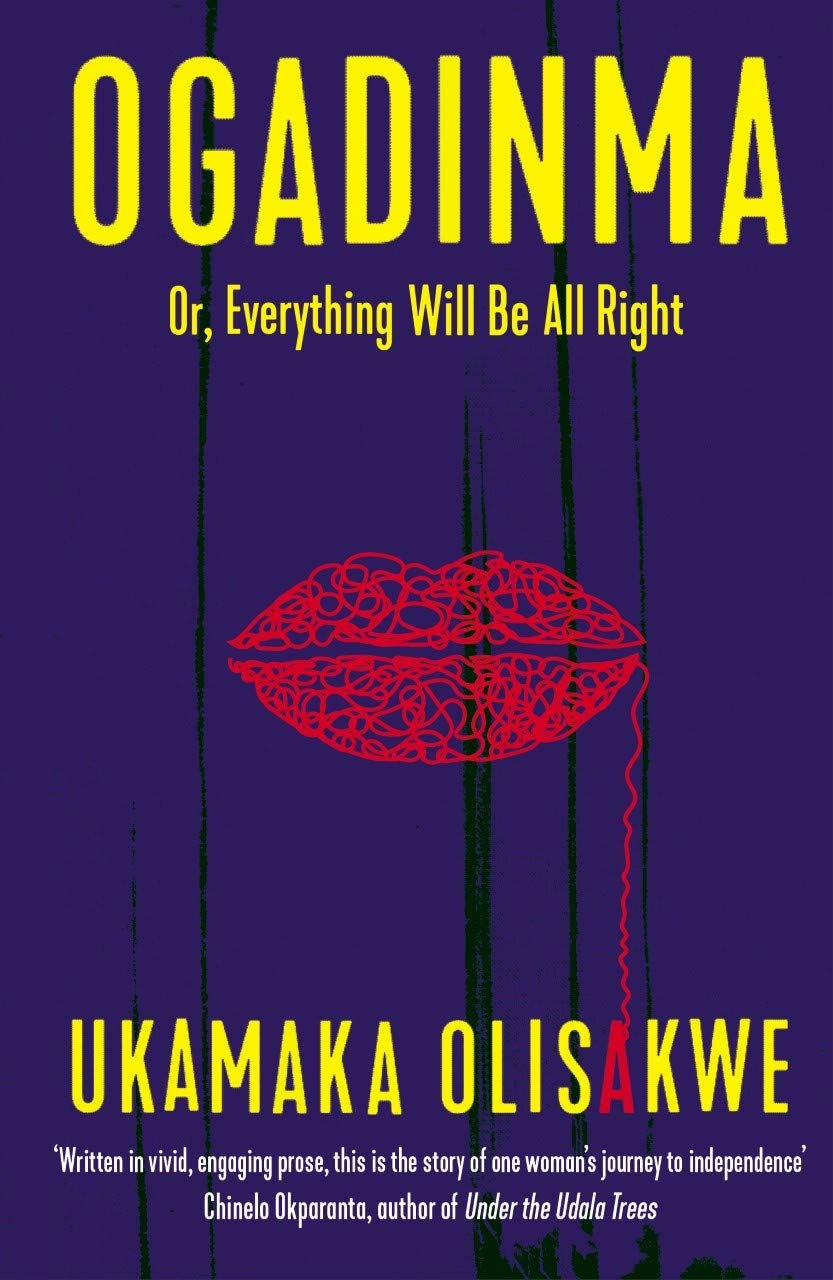
Chels: Ogadinma: Or, Everything Will Be All Right (By Ukamaka Olisakwe)

The Cat: The End of Race Politics (By Coleman Hughes)
RANDOM STUFF 🎲